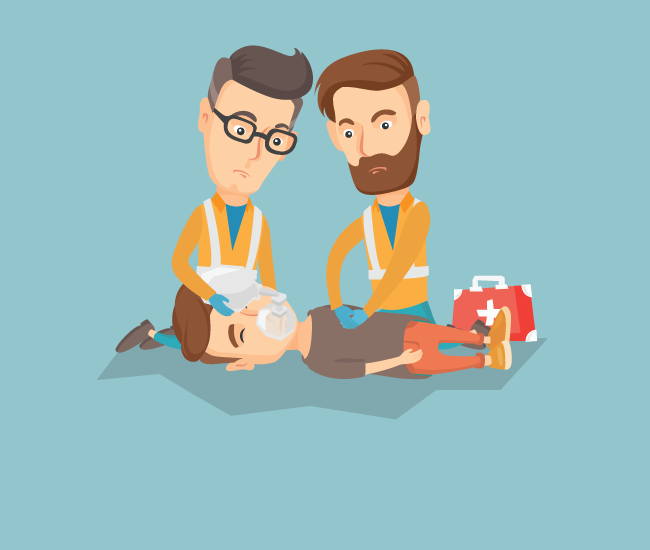
How to Renew CPR Certification in 4 Steps

An up-to-date CPR certification is a requirement for many health care professionals, so it’s important to stay on top of renewing your certification before it expires. And while most people know that they need to be certified in CPR in order to work in certain professions, many don’t know how to renew CPR certification. If your CPR certification has expired or is about to expire, here’s how to renew CPR certification in four easy steps.

6 min read

Prioritizing Care for Mental Health Issues Among Healthcare Professionals

All too often, mental health issues among healthcare professionals are overlooked. Because health professionals are qualified to work in healthcare, it’s assumed that they should also be well-equipped to care for their own mental health. But that isn’t always the case. Read on to learn more about common mental health issues among healthcare professionals and how to prioritize mental health care in the medical workplace.


4 min read

How to Learn CPR: Different Learning Modalities for Every Student

If you work in a profession where knowing CPR is a necessity, it’s important to find a learning method that works best for you. Whether you’re a visual, auditory, or kinesthetic learner, there’s a way for you to learn CPR effectively.

Here are some tips on how to find the right learning method for you.

6 min read

The Evolution of CPR in the Digital Age: A Look at the Contemporary History of CPR

Cardiopulmonary resuscitation (CPR) has been around for centuries, so the history of CPR is long and complex. As technology and medicine have advanced — and continue to do so — so do CPR best practices. Today, online CPR training and certification are a convenient, accessible way to do what used to have to be done in person. Keep reading to learn about the contemporary history of CPR and how it has evolved to the CPR of the digital age that we know today.

11 min read

A Lifesaving Guide to Choosing the Right CPR Device & Tools

One of the most timeless, lifesaving skills you can have today is cardiopulmonary resuscitation (CPR). CPR is used to restore a person’s breathing and circulation in the event of cardiac arrest, and having the right CPR device can make all the difference in an emergency situation. Here’s what to know about CPR tools and devices and how to choose the best CPR device for an emergency.

5 min read

How Has CPR Changed Over the Years? Exploring the Different Variations

Knowing how to perform cardiopulmonary resuscitation (CPR) properly can make all the difference between life and death in an emergency situation. That said, as technology and medicine advance, they lead to new CPR methods and best practices. So, how has CPR changed over the years, and why is it so important for you to know? Read on to find out.

5 min read

When Was CPR Invented? Uncovering the History of Life-Saving CPR

Cardiopulmonary resuscitation, or CPR, is a technique used to restore blood circulation and breathing in an individual who has stopped breathing and whose heart has stopped beating. Knowing how to properly administer CPR can help save a life in a matter of minutes. But when was CPR invented, and how has it changed over the years? Read on for the answers to all your most pressing CPR-related questions — like when was CPR invented and how has it changed over time? — as well as what the future looks like for this life-saving skill.

14 min read

3 Laypersons Save Lives With CPR Skills

For health professionals, CPR certification is just another requirement to meet and task to check off a list, but to the average citizen, it may seem out of reach from their abilities. In reality, though, CPR training has the power to save lives every day — and you don’t need to be a medical professional to perform it. Read on for three shining examples of everyday citizens who sprung into action and were able to save lives with proper CPR training.

4 min read

Surviving the Medical Staff Shortage in Home Health Agencies

A widespread medical staff shortage in home health agencies leaves patients without care, home health aides overworked and exhausted, and home health agencies unable to meet all the needs of their communities. And with the demand for in-home care rising, home health agencies are in great need of solutions to improve employee retention. Read on to learn more about the medical staff shortage and how home health agencies can improve employee retention.

5 min read

4 CPR & First Aid Myths That Make People Hesitate to Save a Life

When a crisis hits, medical professionals aren’t always on the scene to administer CPR or first aid right away. In many cases, a willing bystander stepping in to provide aid can make the difference between life and death for the emergency victim. Medical professional or not, just one ready and able person can save a life. Here are four common myths about administering CPR and why you shouldn’t let them stop you when you need to save a life.

6 min read

4 Myths About CPR & First Aid Training that Prevent People from Getting Certified

Emergencies can happen anywhere and at any time. That’s why we believe it’s vital for everyone to get CPR and first aid training. Unfortunately, misconceptions about that training often make it seem difficult or even impossible to obtain when it can and should be easily accessible to everyone. Here’s the truth about three common myths that prevent people from getting CPR and first aid training.

8 min read

Inspirational Book Recommendations for Home Health Caregivers

Home health caregivers fulfill a vital but difficult role in society. While they pour so much time, attention, and energy into caring for others, their own mental, physical, and emotional needs often go unmet. Whether you’re a caregiver yourself or you have friends, family, or colleagues in health care, here are six inspirational books to share with the home health caregivers in your life.

4 min read