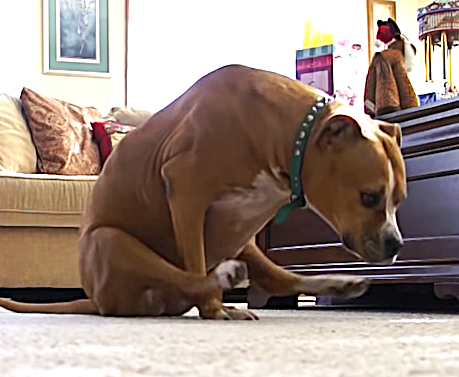
Our dogs display lots of behaviors – some we applaud and some we abhor. Fitting in that latter category is a dog scooting his rear end on the living room rug and sometimes, in front of horrified houseguests.
Don’t blame the dog for misbehaving or attention seeking. That scooting is triggered by a health or grooming issue.
Main Reasons for Scooting
As we teach in our pet first aid classes, you need to activate your pet detective skills when you witness your dog scooting and share your findings with your veterinarian. Here are four possible causes for scooting:
- Irritated anal glands. This pressure building on the two glands located on either side of a dog’s anus can become impacted and cause major discomfort. A dog will scoot his rear end to unblock these glands. You know this is the case because you can smell and see a fishy, oily secretion being released. Yuck!
- Tapeworm invasion. These intestinal parasites look like white rice grains and cause irritating itching around the anus to your dog.
- A food allergy reaction. Switching diets and introducing new ingredients to your dog can lead to intense itchiness, including in the anal area.
- Chronic bacterial or yeast infections. A dog desperately battling these types of infections may experience itching not only in the anal area but all over the skin.
- Dirty, poop-caked fur. Some dogs sport lots of hair that can become matted and trap poop or urine around the anus that is quite irritating.
When To Book a Veterinary Visit
For whatever reason, your dog is feeling major discomfort and seeking relief. Definitely take your dog to the veterinary clinic promptly if:
- Your dog does rump-scooting for more than 24 hours. This signals that he is not able to resolve the issue on his own.
- Your dog whimpers or cries out in pain when attempting to poop or even sit on his rump.
- You see an open wound, lumps or swelling around the anal area.
- You discover pus or blood in your dog’s poop or around his rear end. Be sure to gather this discharge in a bag for your veterinarian to analyze.
Taking Preventive Actions
No one wants to be known as the pet parent of a rear-end scooting dog. You can lessen the chance of your dog dealing with irritated issues in the anal area by:
- Performing a head-to-tail health assessment at least weekly. Take five or 10 minutes and methodically look, smell and feel for any abnormal issues in your dog. Start at the head and move down to the rear end area. Report any issues to your veterinarian.
- Add some tasty fiber to your dog’s diet. Canned plain pumpkin (not the type used for pie filling as that has way too much sugar) delivers lots of health benefits. It contains nutritional fiber plus vitamins A and E to aid in a dog’s digestive health.
- Book regular grooming appointments. Dogs with long coats, thick and curly coats benefit by regular sessions performed by professional dog groomers. Make sure to include what is called a “sanitary trim” in the rear end area to prevent any mats or poop-clinging clumps of fur.
- Stick with parasite-preventing medications year-round. Combat ticks, fleas and tapeworms by providing your dog with veterinarian-approved parasite-fighting medications as prescribed. Do not skip a month or two to try to save money.
Learn More
You can learn more on ways to keep your cats and dogs safe by visiting https://www.protrainings.com/courses/pets. Consider taking our veterinarian-approved online pet first aid/CPR course. Enter this code: CPR – ARDEN MOORE and receive a 10 percent discount! And, if you are interested in becoming a Pro Pet Hero instructor, please click on the BECOME AN INSTRUCTOR button on the home page for more details.