

People regard chocolate as a sweet treat. But it can be dangerous and even deadly if eaten by dogs.
Identifying Risk Factors
The size of the dog plus the type of chocolate play factors in health risks.
- Size of the dog: small dogs who eat chocolate are more impacted than large dogs.
- Type of chocolate: Dark chocolate, baking chocolate and cocoa powder is more toxic for dogs than milk chocolate or white chocolate. That’s because those types contain higher levels of theobromine and caffeine.
Theobromine is a chemical found in cocoa beans that acts as a stimulant when consumed. In people, theobromine is safe because our liver enzymes safely break it down. But dogs lack efficient liver enzymes to break it down. Also, theobromine can stay in a dog’s body for up to 72 hours, reaching toxic levels.
Theobromine can impact a dog’s heart, central nervous system, muscles and kidneys.
Fortunately, in a matter of seconds, you can calculate those risks using what’s known as a dog chocolate toxicity calculator.
Popular Chocolate Toxicity Calculators
Here are three of the most popular sites offering free toxicity calculators:
- Breed.dog Chocolate Toxicity Calculator: https://breed.dog/dog-chocolate-toxicity-calculator
- PetMD Chocolate Toxicity Meter: https://www.petmd.com/dog/chocolate-toxicity
- Pet Med Helper Dog Chocolate Toxicity Meter: https://petmedhelper.com/calculators/dog-chocolate-toxicity
Here’s how these calculators work: You enter your dog’s weight, estimated ounces of chocolate consumed and type of chocolate. I decided to test these calculators. So, I created a scenario in which my 40-pound dog, Kona, ate chocolate using the PetMD calculator. Here are the findings I received within 5 seconds:
Scenario 1: Kona ate 2 ounces of milk chocolate.
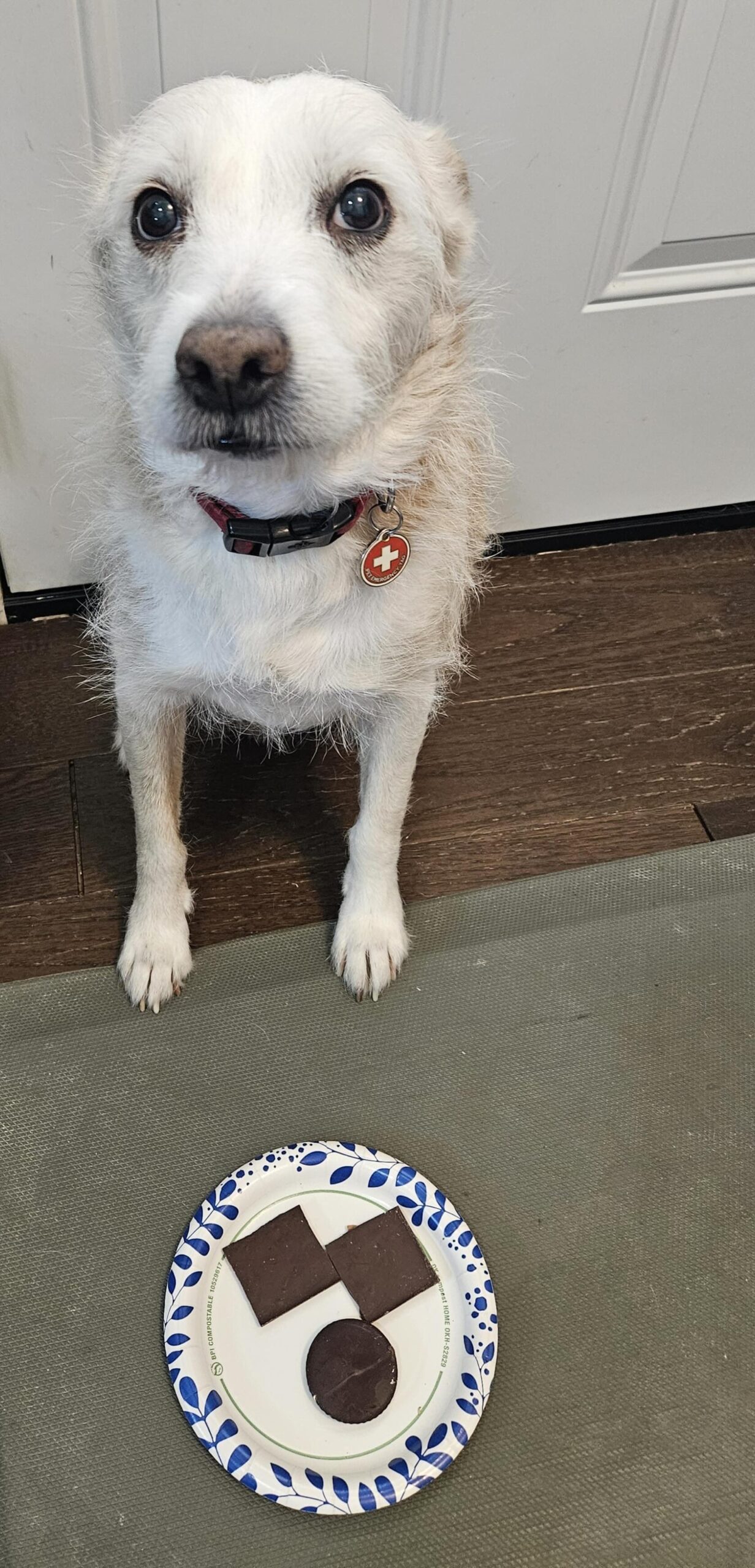
Findings: Woo-hoo! We don’t expect to see symptoms in your dog but continue to monitor. Her. Contact your veterinarian if she shows any signs of tremors, seizures, hyperactivity or fast heart rate.
Scenario 2: Kona ate 2 ounces of dark chocolate.
Findings: Uh-oh! Your pet may need medical attention. Monitor your dog closely for these symptoms: GI upset, vomiting and shaking.
Scenario 3: Kona ate 4 ounces of dark chocolate.
Findings: Ouch! Your pet may need medical attention if she displays these symptoms: vomiting, GI upset, hyperactivity, hypertension and restlessness.
Next Steps to Aid Your Dog
- Contact your veterinary clinic or the nearest veterinary emergency clinic. Or call either the ASPCA Poison Control Hotline (888 426-4435) or Pet Poison Helpline (855 764-7661). Both are staffed 24-7 by board-certified veterinary toxicologists.
- Describe the type and estimated amount of chocolate your dog ate.
- Report symptoms you see in your dog.
- Follow the instructions from the veterinarian.
Final advice: practice safety prevention. Make sure to store chocolates in kitchen drawers, refrigerators and pantries that are not accessible to your dogs.
Learn more
You can learn more on ways to keep your cats and dogs safe by visiting https://www.protrainings.com/courses/pets. Consider taking our veterinarian-approved online pet first aid/CPR course. Enter this code: CPR – ARDEN MOORE and receive a 10 percent discount! And, if you are interested in becoming a Pro Pet Hero instructor, please click on the BECOME AN INSTRUCTOR button on the home page for more details.